This post is also available in:
 עברית (Hebrew)
Wireless communication is becoming increasingly crowded. Radio-based links are under constant pressure from spectrum congestion, interference, and regulatory limits—challenges that are especially acute in dense urban environments. These constraints are pushing researchers to explore alternative ways to move data reliably, particularly for systems that must operate close to critical infrastructure or in RF-sensitive areas.
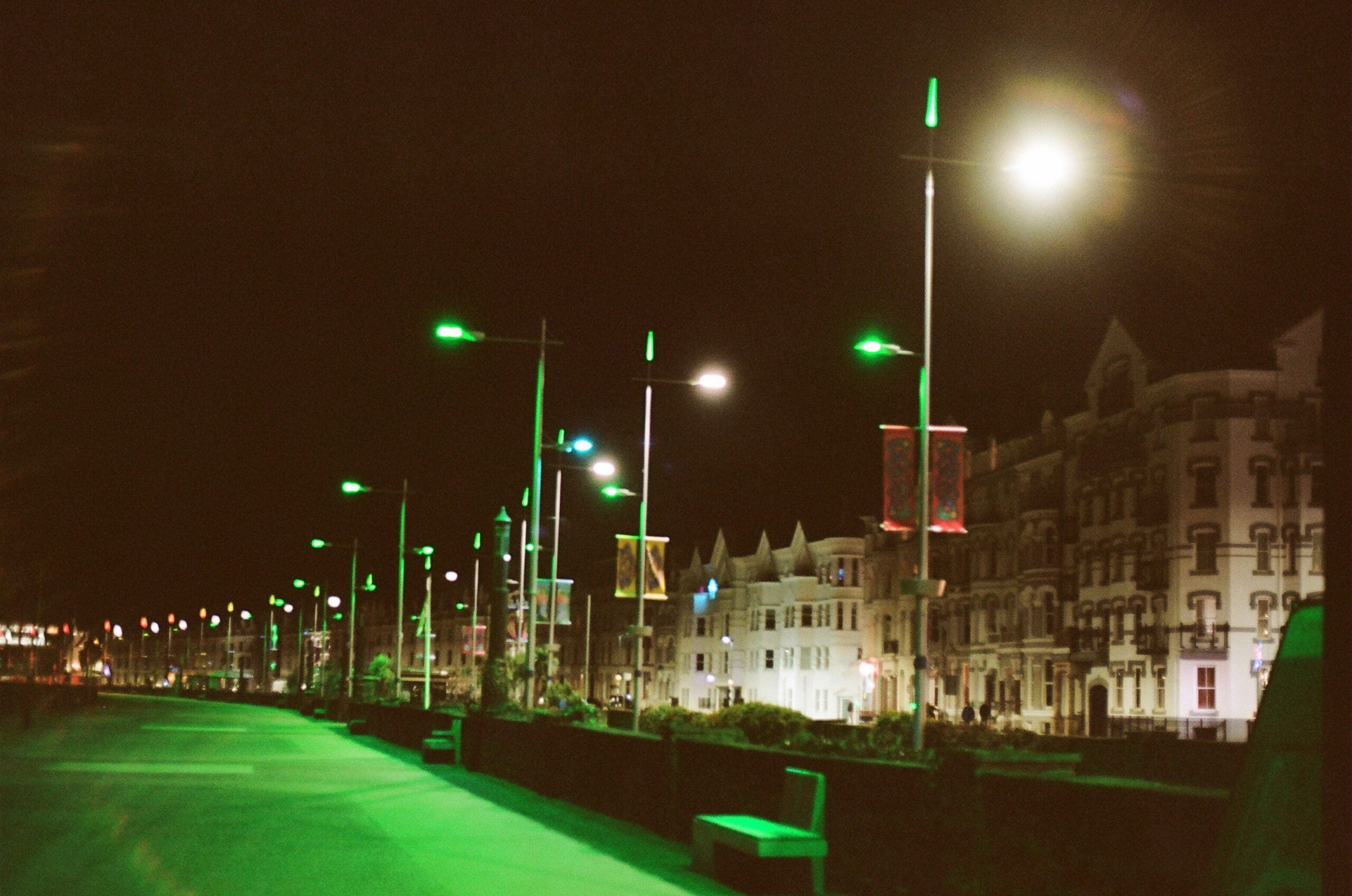
One option gaining renewed attention is visible light communication (VLC), which uses LED light sources to transmit data instead of radio waves. In theory, VLC offers clear advantages: LEDs are already everywhere, from streetlights to traffic signals, and light-based communication does not interfere with existing wireless networks. In practice, however, outdoor VLC, as opposed to indoor VLC, has struggled with two major problems—distortion caused by the physical behavior of LEDs and overwhelming interference from sunlight.
Researchers at Tokyo Polytechnic University now report a practical way to overcome both. Using only commercially available components, they demonstrated a low-cost VLC system capable of stable outdoor data transmission at speeds of up to 3.48 megabits per second over several meters, even under strong ambient light. The key innovation lies in a newly developed 8B13B coding scheme designed specifically for visible light links.
According to Interesting Engineering, the coding approach reshapes how data is sent through LEDs. By using a return-to-zero signal format and carefully balancing the number of “on” and “off” states, the system minimizes visible flicker and maintains synchronization between transmitter and receiver. Crucially, it relies on the rising edges of light pulses rather than pulse width, making it far more resilient to waveform distortion caused by LED response limitations.
The system was implemented on a field-programmable gate array (FPGA) using custom serializer and deserializer logic, with a Raspberry Pi handling data input and output through a standard interface. On the receiving side, multiple photodiodes combined with a narrow-band optical filter suppressed background light, allowing the link to remain stable even in direct sunlight exceeding 90,000 lux.
While the immediate focus is intelligent transportation systems—such as traffic lights transmitting data to nearby vehicles—the implications extend further. From a defense and homeland security perspective, VLC offers a discreet, RF-free communication channel that is difficult to detect or jam using conventional electronic warfare tools. It could support secure short-range data exchange around sensitive facilities, checkpoints, or forward-deployed infrastructure where radio silence or spectrum denial is required.
By demonstrating that robust outdoor VLC is achievable with simple hardware, the study moves the technology closer to real-world deployment, both for civilian safety systems and specialized security applications.