

This post is also available in:
 עברית (Hebrew)
Modern navies face a growing mismatch between aging capital ships and the demands of future air warfare. Aircraft carriers must now support heavier aircraft, unmanned systems, high-energy sensors, and digitally intensive command systems, all while remaining relevant for 40 to 50 years of service. Platforms designed in the late 20th century are increasingly constrained by power generation, deck layout, and growth margins.
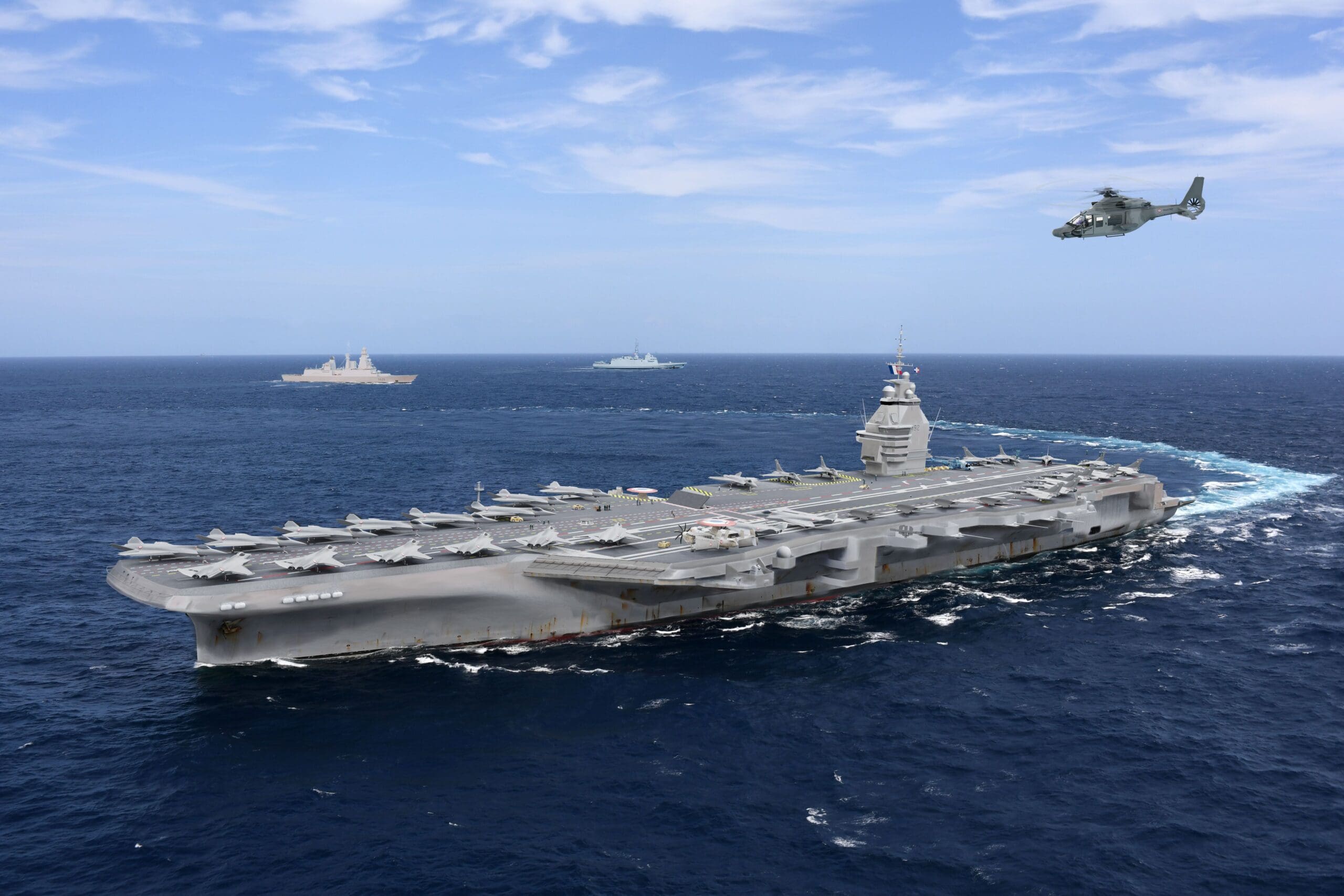
France is addressing this challenge with the start of construction on its next-generation aircraft carrier, the Porte-Avions Nouvelle Génération (PANG). Intended to replace the Charles de Gaulle, the new carrier is being built from the outset to handle future air wings, emerging weapons, and data-driven naval operations. With funding secured in the 2025 budget, the program has moved from planning into execution, with entry into service scheduled for 2038.
According to NextGenDefense, at its core, it is designed to deliver significantly greater capacity and endurance than its predecessor. The ship will be 310 meters long and displace around 78,000 tons when fully loaded, making it the largest warship ever constructed in Europe. Powered by two K22 nuclear reactors, it will generate substantially more electrical power than the Charles de Gaulle, enabling sustained operations at speeds of up to 50 kmph while supporting energy-hungry onboard systems.
The carrier is built to operate as a central node in high-intensity naval operations. It will embark at least 40 aircraft, including 36 combat jets, early-warning platforms, helicopters, and a growing number of light drones. Two to three electromagnetic catapults will allow the launch of heavier, next-generation aircraft with greater efficiency than steam-based systems, while also reducing stress on airframes.
Beyond aviation, the ship reflects a shift toward digitally integrated warfare. The carrier is designed around a data-centric combat system, marking a major step toward more digital naval operations. This architecture is intended to shorten decision cycles and improve coordination across air, surface, and subsurface forces. The design also allows for future upgrades, including the integration of directed-energy weapons as those technologies mature.
Construction is being carried out in Saint-Nazaire by a combination of civilian and naval shipbuilding expertise. While the carrier will not enter service for more than a decade, its design choices signal how major navies are preparing for a future where carriers must generate more power, support mixed manned–unmanned air wings, and adapt continuously to new threats.
With this system, France is investing in a platform built not just to replace an existing carrier, but to anchor naval aviation well into the second half of the century.























