This post is also available in:
 עברית (Hebrew)
A recent study out of China has generated buzz, with researchers claiming that their AI system has successfully defeated human pilots in simulated dogfights and countered complex aerial maneuvers in intense combat scenarios. Published in the Journal of Gun Launch & Control, the study outlines the use of advanced infrared imaging and AI-driven predictive modeling to anticipate enemy movements in real-time, a major leap over traditional trajectory-based prediction methods.
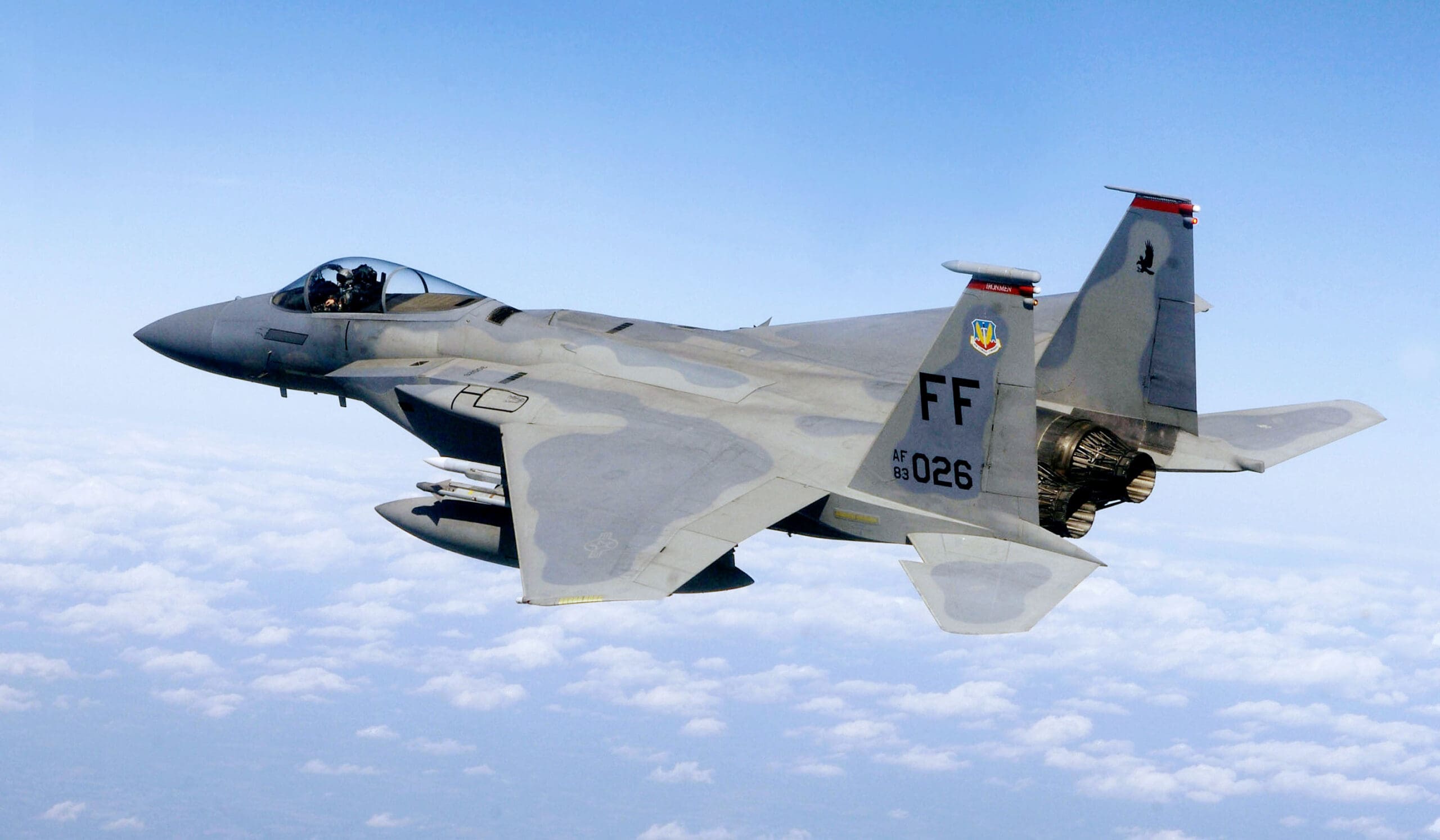
According to South China Morning Post, at the core of the new system is a modified YOLOv8 neural network that analyzes millimeter-level deformations in an aircraft’s control surfaces—such as the rudder and elevator of an F-15—during flight. These deformations are then fed into a long short-term memory (LSTM) network, enhanced with attention mechanisms, to predict the opponent’s next move. Researchers claim that this approach has shown a tenfold improvement in prediction accuracy compared to previous methods, with the AI reportedly able to anticipate trajectory shifts within milliseconds.
However, traditional AI systems have struggled to handle the erratic, instinct-driven maneuvers of human pilots. Although simulations reportedly demonstrate the AI’s success in tracking complex flight profiles, real-world testing on actual combat systems has not been disclosed.
In the study, the AI was put to the test against high-difficulty flight profiles mimicking real-world tactics, where it was able to anticipate moves such as rapid ascents after releasing munitions and sudden jinking to evade fire.
If the technology proves as accurate in real-world conditions as it has in simulations, it could mark a significant step forward in automated anti-aircraft defense. For now, though, the broader implications of this AI system remain to be fully tested and verified.