This post is also available in:
 עברית (Hebrew)
Modern electronic warfare increasingly revolves around one challenge: finding signals that are designed not to be found. Advanced radar systems now use low-probability-of-intercept waveforms, variable transmission patterns, and adaptive power management to reduce the chances of detection by enemy sensors. Traditional electronic intelligence systems can struggle to identify and classify these increasingly complex emissions quickly enough during operations.
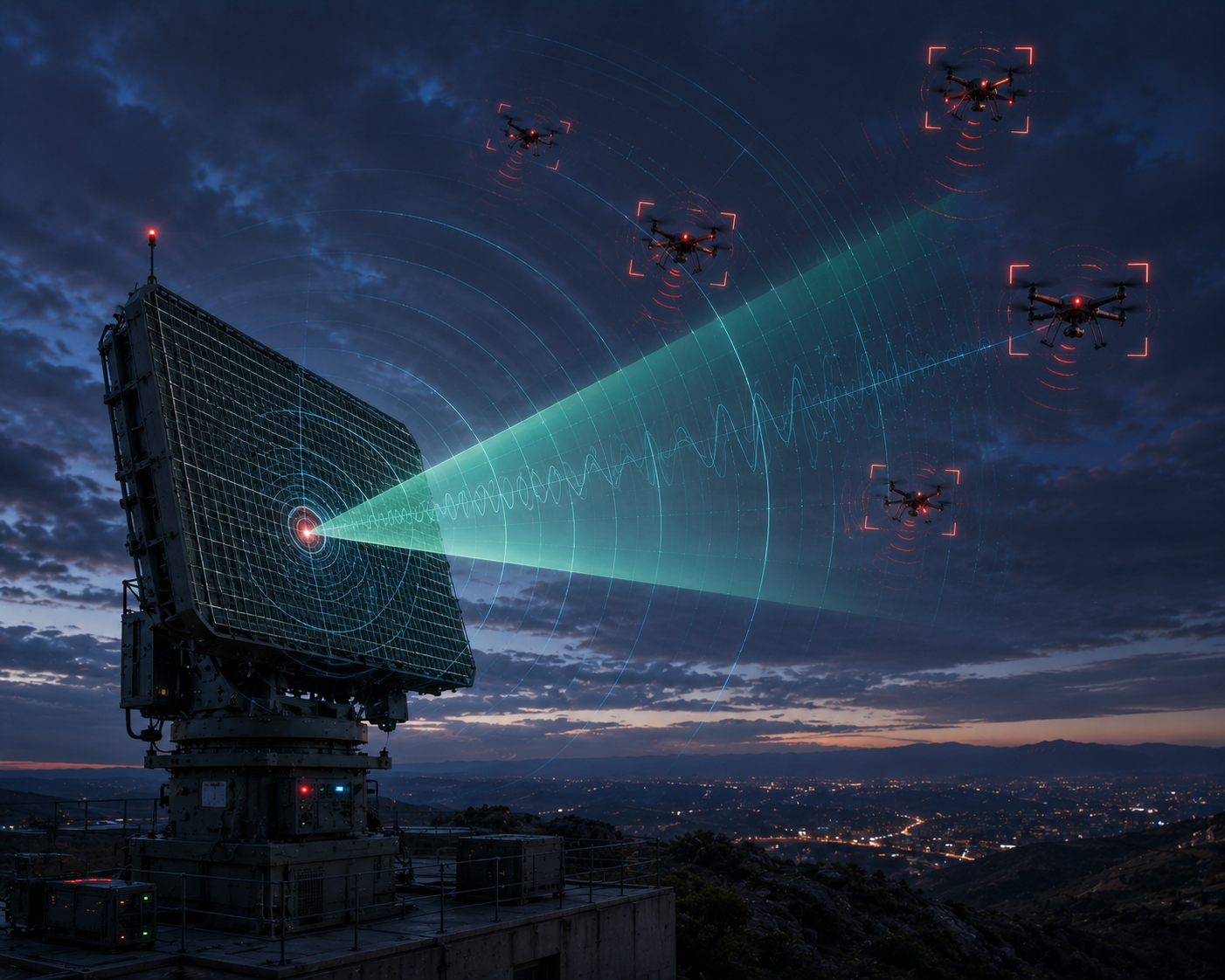
A new electronic intelligence sensor (called ELIT AI) is designed to address that problem by combining adaptive signal interception with artificial intelligence-driven analysis. The system continuously scans the electromagnetic spectrum, searching for radar and communications emissions that may be difficult to detect using conventional interception methods.
According to NextGenDefense, at the core of the platform is a software-defined radio architecture capable of adapting dynamically to changing signal environments. Instead of monitoring only fixed frequencies or predictable waveform patterns, the system can analyze wideband electromagnetic activity in real time and identify unusual or low-visibility emissions as they appear.
Artificial intelligence is used to accelerate signal interpretation and prioritization. Once the sensor detects an emission, onboard AI tools help classify the signal type, assess its characteristics, and determine potential operational relevance. This allows operators to build a clearer electronic picture of the battlespace while reducing the time required for manual analysis.
The system also supports automated recording triggers and post-mission technical analysis. Signals considered important or suspicious can be captured automatically for deeper review, while real-time visualization tools provide operators with a tactical overview of electromagnetic activity during operations.
One of the key technical goals is improving sensitivity against low-probability-of-intercept radars. These systems often vary power levels, frequencies, and transmission timing specifically to avoid being recognized by traditional electronic support measures. According to the developers, the new platform is designed to maintain responsiveness even against highly adaptive signal environments.
From a defense perspective, electronic intelligence systems are becoming increasingly important as warfare expands across the electromagnetic spectrum. Detecting hostile radars, communications networks, and sensor activity without revealing one’s own position can provide major operational advantages for surveillance, targeting, and force protection.
The platform’s modular architecture also allows deployment across multiple environments, including fixed installations, vehicles, and other operational platforms. As radar and electronic warfare technologies continue evolving, AI-assisted ELINT systems may become a central component of future electromagnetic operations.