This post is also available in:
 עברית (Hebrew)
Modern combat increasingly depends on the rapid movement of information between units. Drones, helicopters, artillery systems, and ground troops all generate large amounts of data that must be shared quickly to support decision-making. But in high-intensity conflicts, communication networks themselves are becoming primary targets for cyberattacks, electronic jamming, and long-range strikes.
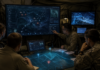
A new battlefield command-and-control system (NGC2) is being tested to address this problem by creating a more distributed and resilient combat network. The platform is designed to connect aviation units, ground forces, logistics teams, drones, and command elements into a shared operational picture while continuing to function under contested conditions.
The system uses cloud-enabled software architecture to move battlefield information between units in near real time. During a recent large-scale exercise, attack helicopters exchanged reconnaissance and targeting data directly with ground formations, artillery units, and unmanned systems operating across the battlefield. The goal is to reduce delays between identifying a threat and responding to it.
One of the central concepts behind the network is mobility. Instead of relying on large, centralized command centers that are easier to locate and target, units operated from smaller and more dispersed positions. According to Interesting Engineering, helicopter crews also used temporary forward refueling and rearming sites positioned closer to frontline areas, allowing them to return to operations more quickly while reducing exposure.
The system is designed to maintain coordination even when parts of the network are degraded or disrupted. This reflects growing concern over modern electronic warfare environments, where communication systems may face continuous interference. By distributing command functions across multiple nodes, the network aims to prevent the loss of a single headquarters from disrupting operations entirely.
From a defense perspective, integrated command networks are becoming increasingly important as military operations expand across multiple domains simultaneously. Ground forces, aviation assets, cyber units, drones, and space-based systems all rely on rapid data exchange to coordinate effectively under pressure.
The broader effort also points toward increasing use of AI-assisted tools capable of helping commanders process large volumes of battlefield information more quickly. As modern warfare becomes more data-driven, resilient digital networks may become as critical to military effectiveness as the platforms connected to them.