This post is also available in:
 עברית (Hebrew)
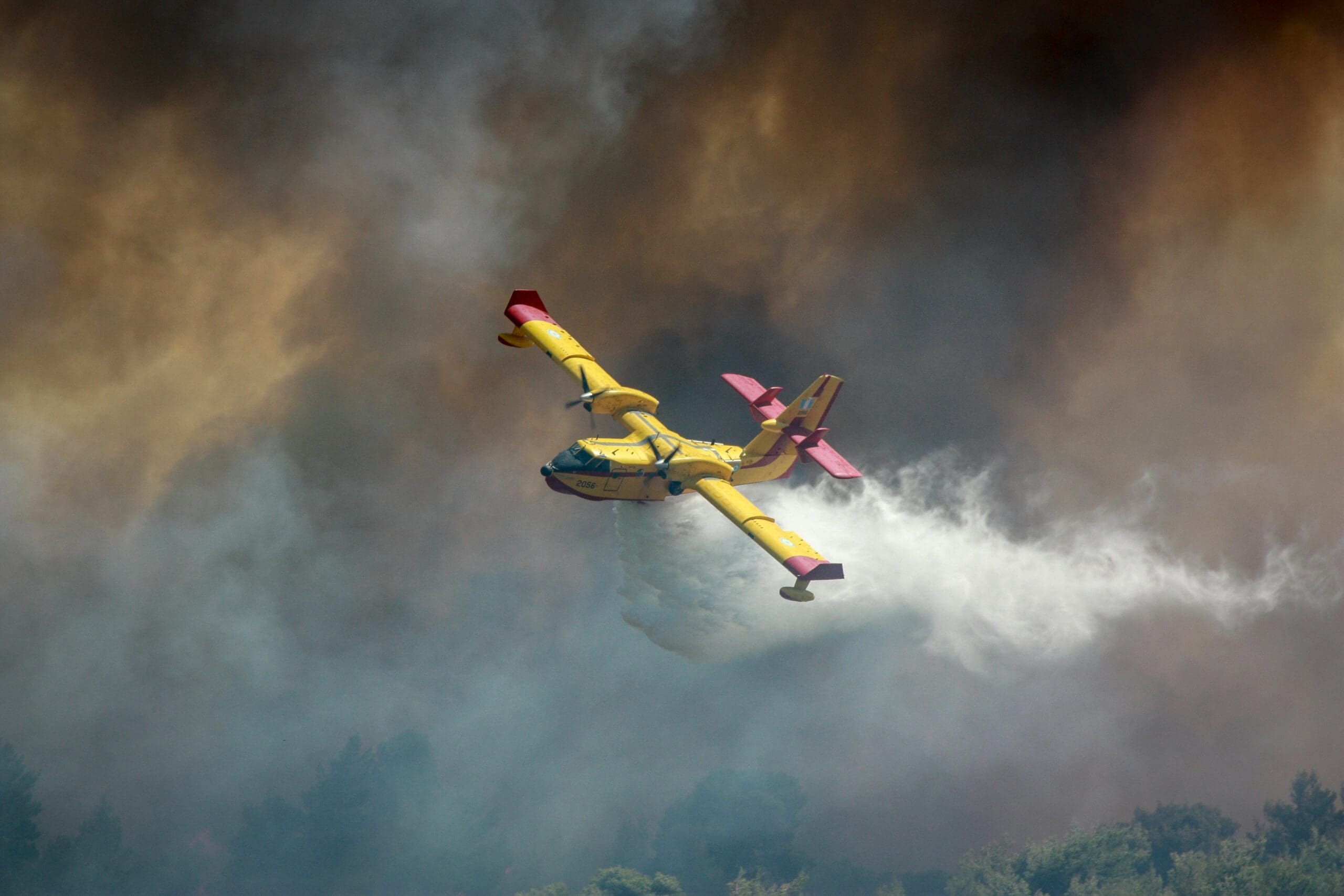
Training helicopter pilots for wildfire missions is particularly difficult because the environment itself is constantly changing. Smoke, shifting winds, rising heat, and the interaction between rotor downwash and flames create highly unstable flight conditions that are difficult to reproduce safely in real-world exercises. Conventional simulators typically rely on pre-programmed scenarios, limiting their ability to replicate the unpredictable dynamics pilots face during actual firefighting operations.
Researchers have now developed a simulation framework designed to model those interactions in real time. The system combines atmospheric physics, fire behavior, helicopter aerodynamics, and water-droplet dynamics into a single simulation environment capable of updating continuously as conditions evolve.
According to TechXplore, unlike traditional training systems, the simulator does not rely on fixed “pre-baked” models. Instead, it calculates how rotor wakes influence flames, how fires generate changing plumes of hot air, and how water drops interact with the fire and surrounding atmosphere. These effects are processed dynamically, allowing the simulated environment to react instantly to pilot actions and changing conditions.
A key component of the system is an aerodynamic solver based on the Lattice Boltzmann Method, which uses parallel GPU processing to handle complex fluid dynamics at high speed. Running on commercially available graphics hardware, the platform can reportedly maintain simulation rates of 60 frames per second or higher, fast enough for real-time interaction with flight controls and motion systems.
The simulation also models how helicopter rotor downwash can unintentionally intensify a fire before the aircraft arrives overhead. In one test scenario, airflow generated by a helicopter approaching at low speed altered the fire’s behavior and created a new plume that the aircraft later encountered. Researchers say this type of interaction is difficult or impossible to recreate in conventional simulators.
Beyond pilot training, the technology could support future autonomous stabilization systems designed to reduce pilot workload during complex firefighting missions.
From a defense and security perspective, realistic environmental simulation has broader applications beyond wildfire response. Similar modeling approaches could improve training for military helicopter operations in degraded environments where airflow, terrain, smoke, or heat significantly affect aircraft handling.
As wildfire intensity and operational complexity continue to increase, more adaptive and physically accurate simulation tools may become increasingly important for preparing pilots for hazardous low-altitude missions.
The research was published here.