This post is also available in:
 עברית (Hebrew)
Modern military operations increasingly rely on long-range precision fires, but many of these capabilities have traditionally depended on ships or aircraft. In heavily contested regions, those platforms can face growing risks from anti-access systems, electronic warfare, and long-range surveillance. This has pushed militaries to explore more mobile, land-based alternatives that can operate from dispersed locations while still delivering strategic reach.
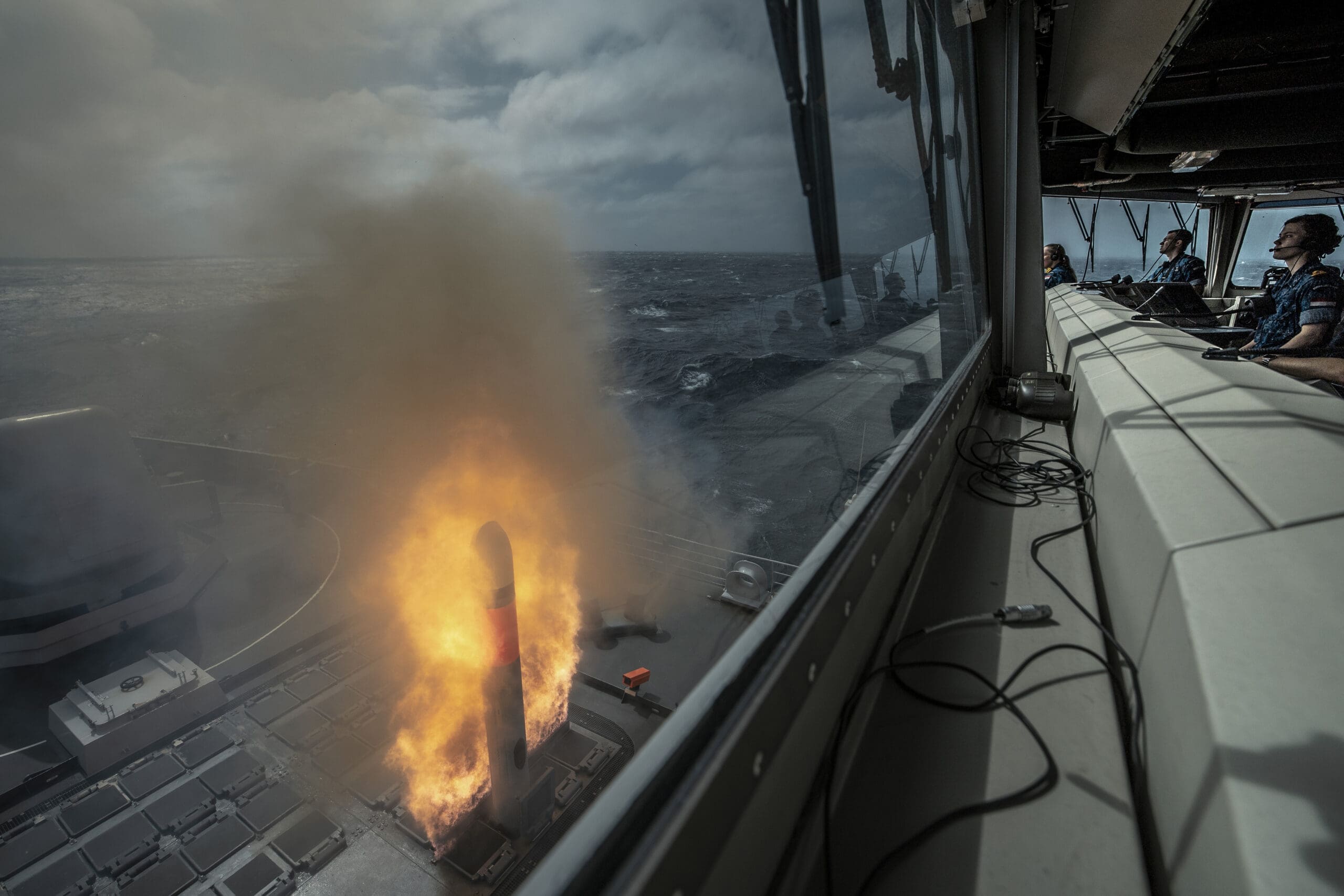
A recent operational launch demonstrated how this concept is evolving. During a large-scale military exercise, a ground-based missile system fired a Tomahawk cruise missile at a target roughly 629 kms away. The event marked the first operational use of the launcher in the region and highlighted the growing role of mobile land systems in long-range strike missions.
According to Interesting Engineering, the launcher is built around a modular vertical launch architecture mounted on a trailer platform. Each unit carries four missile canisters and can deploy rapidly across remote or austere terrain. The system is designed to fire multiple missile types, including long-range land-attack weapons and multi-role interceptors, giving commanders flexibility depending on mission requirements.
One of the key capabilities demonstrated was mid-flight retargeting. Using a two-way data link, operators can adjust the missile’s target after launch, allowing it to respond to changing battlefield conditions. The missile itself combines several guidance methods, including inertial navigation, GPS updates, and terrain-matching systems that help it navigate at low altitude while reducing detection risk.
Mobility is central to the system’s design. Because the launcher can relocate quickly across dispersed positions, it is more difficult to detect and target compared to fixed installations. This supports a broader operational model focused on distributed deployments and rapid repositioning. However, the system also depends heavily on resilient communications and sensor networks, making protection against cyber and electronic warfare threats an important factor.
From a defense perspective, the shift toward ground-based long-range strike systems reflects changing operational priorities. Mobile launchers capable of precision engagement at extended distances can support joint operations while reducing dependence on vulnerable forward bases or naval assets.
The exercise also demonstrated integration between allied forces, with personnel participating directly in targeting and command procedures. As these systems become more widespread, interoperability and distributed operations are likely to play an increasingly important role in future military planning.