This post is also available in:
 עברית (Hebrew)
Maritime operations are becoming increasingly complex, with growing demand for persistent surveillance, extended reach, and reduced risk to personnel. Traditional submarines can provide these capabilities, but they are expensive, require large crews, and are limited in number. As a result, navies are looking for ways to expand coverage without significantly increasing cost or exposure.
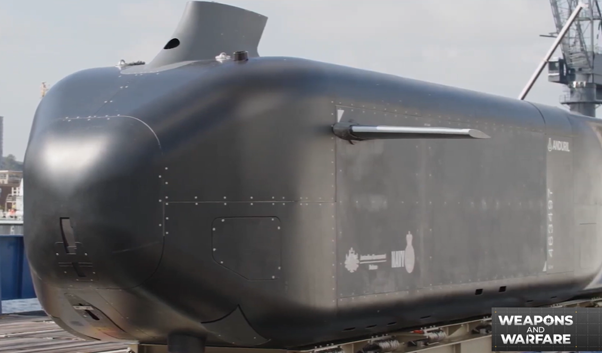
A new class of large autonomous underwater vehicles, named Ghost Shark (developed by Anduril Industries and Defence Science and Technology Group), is designed to address this gap by operating independently for extended periods beneath the surface. Unlike conventional submarines, these platforms do not require onboard crews, allowing them to stay deployed longer and carry out missions without risking human life.
According to Interesting Engineering, the system is built around endurance and adaptability. Its modular design allows it to be configured for different roles, including intelligence gathering, surveillance, and other mission types. By remaining submerged and operating quietly, it can monitor sensitive areas while maintaining a low profile.
One of the key advantages is scalability. Compared to traditional submarines, these platforms are faster to produce and can be deployed in greater numbers. This enables broader maritime coverage and supports distributed operations, where multiple assets work together across large areas.
Another notable aspect is integration. The platform is part of a wider operational framework that combines different autonomous systems under a dedicated command structure. This allows for coordinated missions, faster deployment cycles, and continuous refinement of operational concepts.
From a defense perspective, this reflects a broader shift toward unmanned and AI-driven maritime capabilities. Autonomous underwater systems can extend the reach of naval forces, provide persistent situational awareness, and operate in environments that may be too risky for crewed platforms. Their ability to function independently also supports missions where communication is limited or delayed.
The approach also introduces a different balance between cost and capability. By complementing traditional submarines rather than replacing them, these systems offer a way to expand operational capacity without the same level of investment.
As navies continue to adapt to evolving maritime challenges, autonomous underwater platforms are becoming a central component of future force structures, focused on flexibility, endurance, and reduced reliance on crewed systems.