

This post is also available in:
 עברית (Hebrew)
Ballistic missile defense systems rely heavily on early detection and predictable flight paths. In many cases, warning time and trajectory calculation are critical for interception. However, newer missile technologies are increasingly designed to reduce both — making them harder to detect, track and stop.
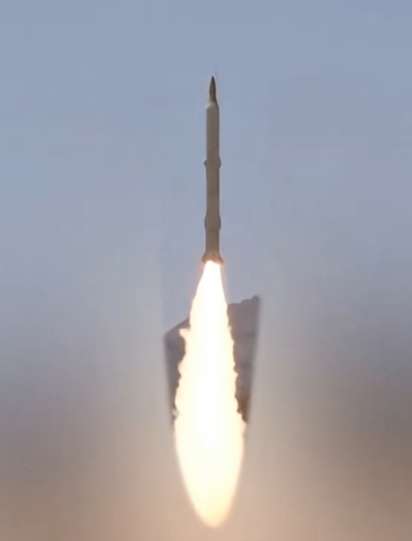
Recent use of a medium-range ballistic missile by Iran (called Sejjil-2) highlights this shift. The system features a two-stage solid-fuel design with a range of approximately 2,000 kilometers, enabling it to reach targets across the region. Unlike older liquid-fueled missiles, which require lengthy preparation before launch, solid-fuel systems can be stored in a ready-to-fire state. This significantly shortens launch timelines and reduces the opportunity for preemptive detection.
Mobility adds another layer of complexity. The missile is deployed from road-mobile launchers, allowing it to be relocated quickly before and after firing. This makes it more difficult for opposing forces to identify and neutralize launch sites.
According to Interesting Engineering, a notable feature of the system is its reported maneuverability during flight. Often described as a “dancing” missile, it may be capable of adjusting its trajectory in mid-course or during reentry. Such behavior complicates interception, as missile defense systems typically depend on predicting a stable flight path. Even limited maneuvering can reduce the effectiveness of interception algorithms.
The missile is capable of carrying a payload of around 700 kilograms, combining range and payload capacity in a single platform. Over time, improvements in guidance systems have reportedly enhanced accuracy and operational performance.
From a defense perspective, the combination of solid-fuel propulsion, mobility and potential maneuverability presents a more challenging target set. Shorter warning times, reduced predictability and flexible deployment increase the burden on detection and interception systems.
More broadly, the use of such systems reflects a shift from deterrence toward operational deployment of advanced missile capabilities. As missile technologies evolve, defensive strategies will need to adapt to address faster launch cycles and less predictable trajectories.
These developments point to a changing balance between offensive missile systems and defensive countermeasures, with increasing emphasis on speed, survivability and adaptability.























