

This post is also available in:
 עברית (Hebrew)
Coordinating multiple drones and ground robots during a complex mission is rarely simple. Operators must manage sensor feeds, assign roles, deconflict movement paths and adapt to changing conditions—all while maintaining communication links. As fleets grow larger and more diverse, the cognitive burden on human teams increases.
A new software layer known as the Fury Autonomous Vehicle Orchestrator is designed to address that challenge. The system translates high-level, spoken instructions into executable mission plans for heterogeneous unmanned assets operating on the ground and in the air. Rather than manually piloting each platform, a commander can issue intent verbally, and the software converts that guidance into coordinated actions.
Before execution, the system validates the proposed mission plan, assigns specific roles to each vehicle and then supervises progress in real time. According to NextGenDefense, if conditions shift, it can reallocate tasks and adjust movements accordingly. The platform also tracks mission priorities and compiles post-operation reports for review.
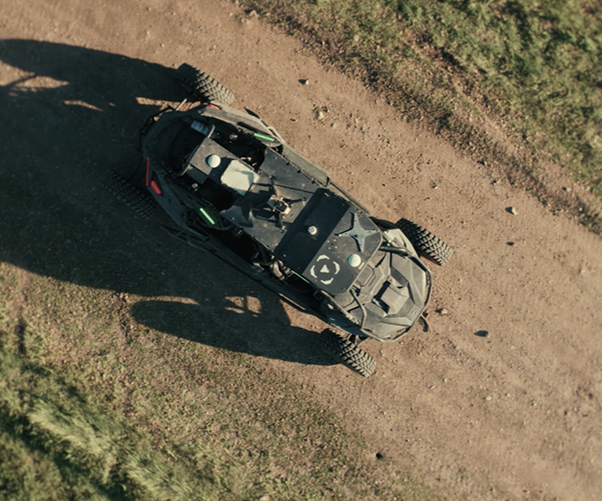
Demonstration footage illustrates how the system manages a search-and-destroy scenario. After confirming the human-issued command, unmanned ground vehicles maneuvered into concealed positions. Drones deployed from those vehicles conducted reconnaissance, sharing sensor data across the fleet. Once a target was identified, one drone executed the strike while another maintained overwatch. The orchestration layer coordinated these steps and generated a mission summary at completion.
Technically, the system functions as an interoperability layer between command-and-control systems and mixed unmanned assets. It is designed to operate across domains and reportedly maintain functionality in degraded communications environments, including edge deployments where bandwidth may be limited.
From a defense perspective, such orchestration tools reflect a broader move toward distributed, autonomous operations. Militaries are investing in unmanned platforms to extend reach and reduce risk to personnel, but without effective coordination software, large fleets can become difficult to manage. A system that converts intent into synchronized action could enable more efficient use of drones and robotic vehicles in reconnaissance, logistics or strike roles.
While human oversight remains central to decision-making, software-driven orchestration may increasingly shape how unmanned systems are deployed in future multi-domain operations.























