This post is also available in:
 עברית (Hebrew)
Modern military operations face a growing mismatch between threats and available strike options. High-end precision weapons deliver accuracy and range, but they are expensive, limited in number, and not always suited for countering massed or time-sensitive targets. Recent conflicts have highlighted the need for long-range strike systems that are precise, flexible, and affordable enough to be used at scale without exhausting inventories of costly munitions.
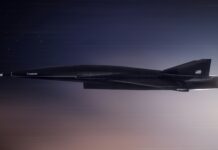
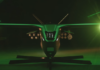
A new class of launched effects vehicles is designed to address that gap. The Red Wolf kinetic vehicle is being developed as part of a precision strike concept that emphasizes range, modularity, and rapid deployment from multiple platforms. Rather than relying on a single-purpose missile, the system is built around compact vehicles that can be launched from aircraft, ground launchers, or maritime platforms using standard interfaces. This allows forces to project precision effects from a safe distance while adapting quickly to changing battlefield conditions.
The vehicle is optimized for long-range, high-speed strikes and has already demonstrated operational maturity through dozens of flight tests. These include low-altitude launches from rotary-wing aircraft, proving that the vehicle can be deployed from platforms not traditionally associated with long-range precision fires. The emphasis is on flexibility: the same vehicle family can be integrated across different services and domains without extensive platform-specific modifications.
Beyond kinetic strike, the broader “launched effects” concept supports multiple mission types. According to Interesting Engineering, vehicles in this family can carry payloads for electronic warfare, target tracking, decoy operations, or communications relay. Advanced onboard software enables in-flight collaboration, retargeting, and coordinated behavior among multiple vehicles, supporting swarm-style tactics. Designs can also be adapted for recovery, allowing reuse in certain mission profiles.
From a defense and homeland security perspective, this approach reflects a shift toward distributed, cost-effective firepower. Systems like this intend to counter both conventional threats and large numbers of lower-cost adversary platforms, including unmanned systems. By combining precision, autonomy, and interoperability, they offer commanders more options without relying solely on high-end weapons.
As militaries look to balance deterrence, sustainability, and operational flexibility, launched effects vehicles represent a practical response. They prioritize reach, adaptability, and affordability—qualities increasingly central to modern strike and security operations.