

This post is also available in:
 עברית (Hebrew)
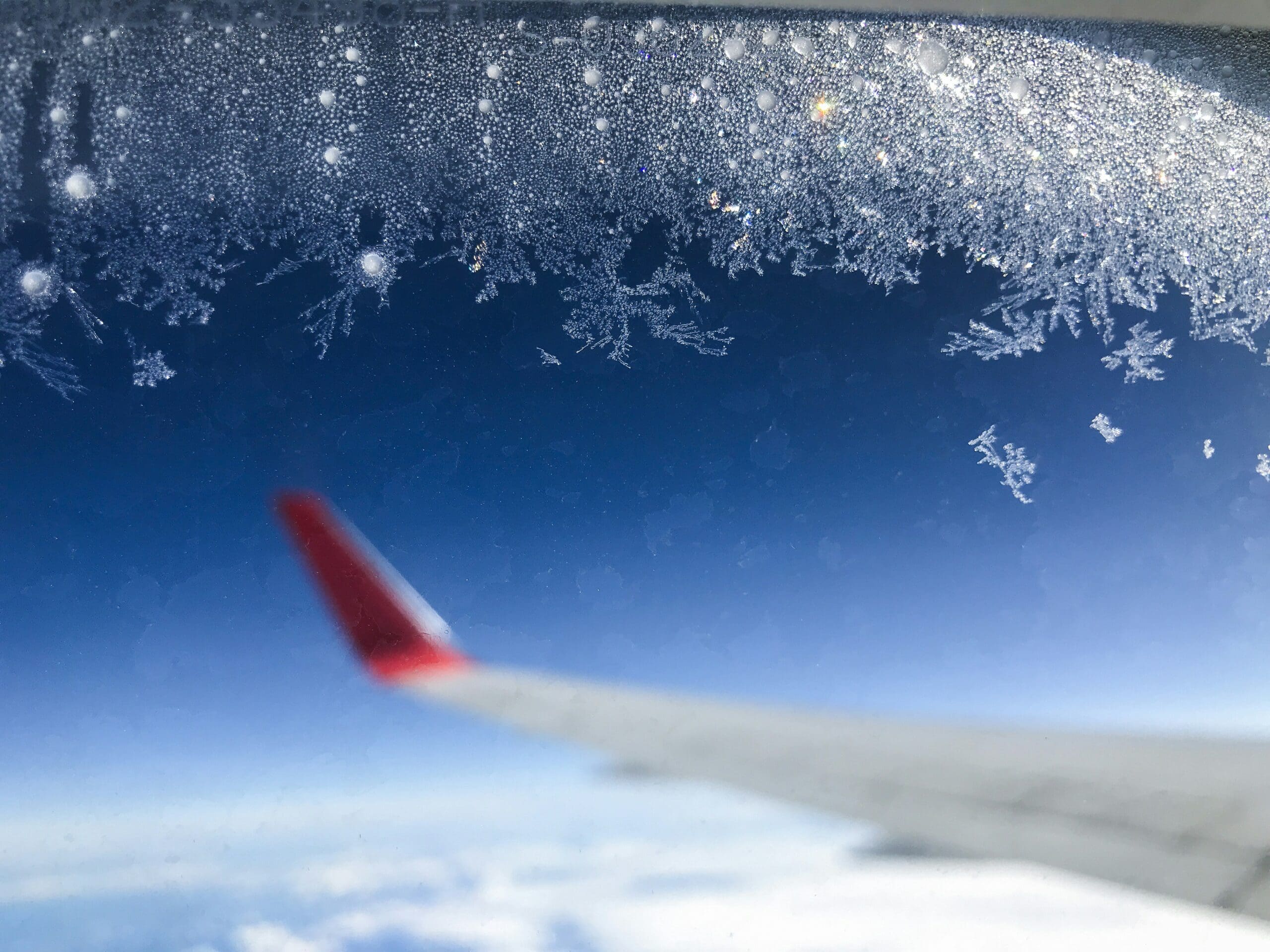
Icing on aircraft surfaces remains a persistent operational challenge. During cold and wet conditions on the ground, ice accumulation can delay departures, disrupt schedules, and create safety risks if protection degrades before takeoff. To manage this, aircraft rely on deicing fluids to remove existing ice and anti-icing fluids to prevent new buildup while waiting on the runway. The effectiveness of these fluids is measured by their “holdover time” — the window during which the aircraft remains protected. Extending that window has proven difficult without increasing cost or complexity.
A newly published study suggests a surprisingly simple way to improve performance. Researchers found that adding very small amounts of low-molecular-weight gelators (LMWGs) to existing anti-icing fluids can nearly double their holdover time. These gelators are small organic molecules already used in everyday products such as cosmetics and adhesives, where they form soft, self-assembling gel networks.
According to TechXplore, the researchers blended a specific gelator, known as DBS, into commercially available aviation anti-icing fluids that already contain polymer additives. Unlike traditional thickening agents, the gelator works by forming a microscopic network within the fluid, reinforcing the protective film without significantly altering how the fluid is applied. Tests showed that adding just 0.25 grams of DBS per liter extended holdover times from around one hour to as much as two hours under controlled freezing conditions.
Crucially, the modified fluids retained the behavior required for aviation use. At rest, the gel structure remained stable and resisted ice formation. When subjected to shear forces — similar to airflow during taxi or takeoff — the structure broke down as intended, allowing excess fluid to shed cleanly from the aircraft surface.
The findings address a long-standing limitation of polymer-based anti-icing fluids, which can be costly and offer diminishing returns when further thickened. The gelator approach improves performance without major reformulation and can be blended directly into existing products.
While the study focused on civil aviation, the implications extend to defense as well. Military aircraft often operate from austere bases in cold environments, where repeated anti-icing cycles increase logistical burden and ground exposure. Longer-lasting anti-icing protection could reduce turnaround times, limit fluid consumption, and improve sortie availability in cold-weather operations.
Because the gelators are inexpensive and compatible with current fluids, researchers suggest the approach could be practical for real-world adoption. Sometimes, a small change in chemistry can deliver a meaningful operational advantage.
The research was published here.























