This post is also available in:
 עברית (Hebrew)
As mobile networks move toward sixth-generation capabilities, expectations are shifting well beyond faster data speeds. Future networks are expected to deliver intelligence—running AI models close to users, even in remote or infrastructure-poor regions. That vision runs into a practical obstacle: terrestrial networks alone struggle to provide low-latency, high-capacity AI services at truly global scale, especially as workloads grow heavier and more time-sensitive.
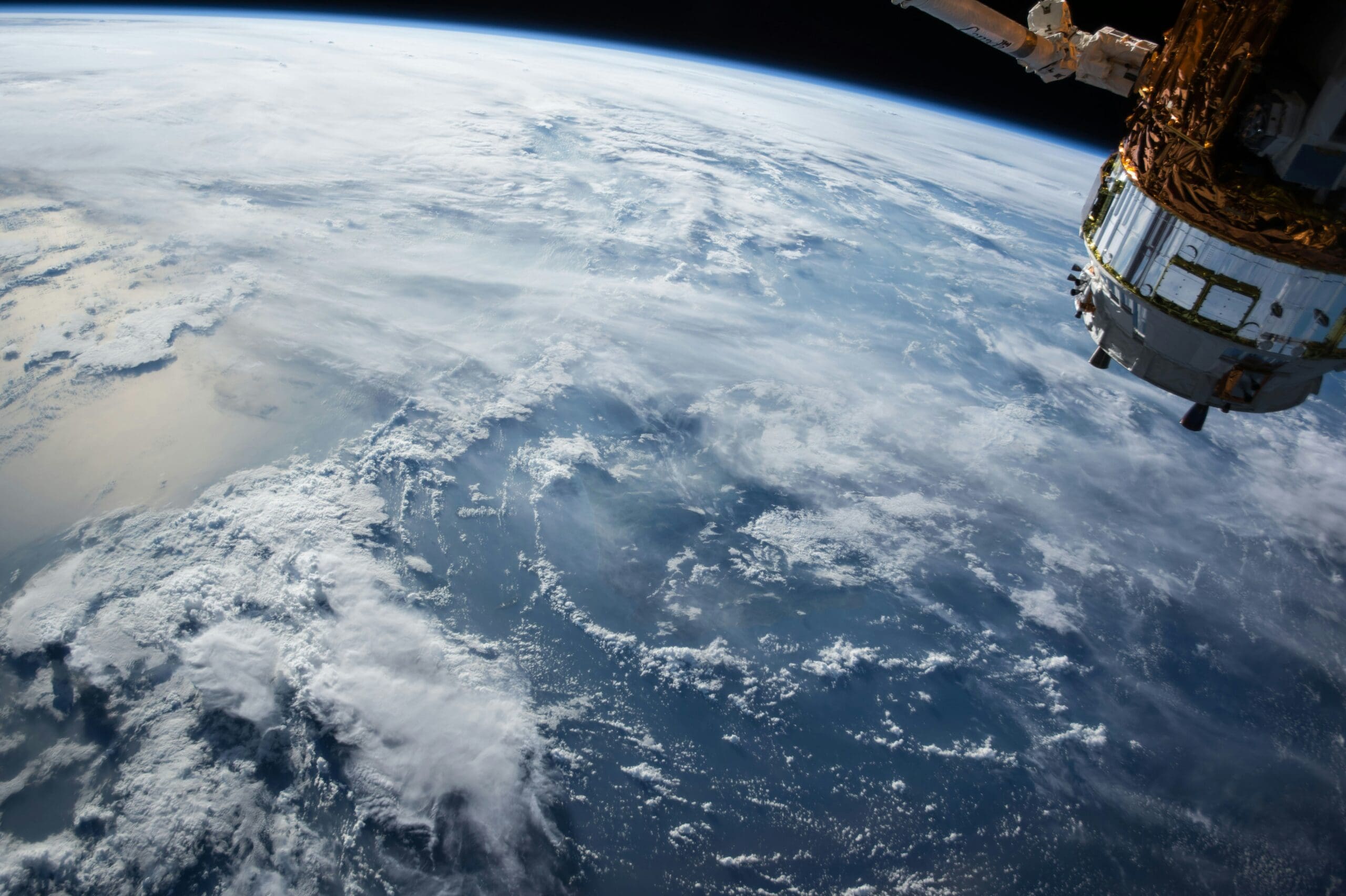
A new research framework proposes extending edge computing into space. Researchers from the University of Hong Kong and Xidian University suggest using satellites not only as communication relays, but also as active computing nodes within space–ground integrated networks. Their concept, described as space–ground fluid AI, treats AI models and data as mobile elements that can move continuously between satellites and ground systems, rather than being fixed in one location.
The approach is designed to address two longstanding limitations of satellite-based AI: rapid satellite motion and constrained links between space and ground. Instead of fighting those constraints, the framework incorporates them into how AI tasks are managed. Satellite movement, for example, is used as part of the learning process rather than being seen as a disruption.
According to Interesting Engineering, the proposed system rests on three mechanisms. Fluid learning accelerates AI training by spreading model updates as satellites pass over different regions, avoiding the need for dense infrastructure or constant inter-satellite connectivity. Fluid inference divides neural networks into smaller segments that can be executed across satellites and ground nodes, allowing tasks to adapt to available computing power and link quality in real time. Fluid model downloading reduces bandwidth demands by caching only selected model parameters on satellites and distributing them efficiently through multicast and migration.
For defense and homeland security applications, this model has clear implications. Secure communications, persistent surveillance, and real-time decision support increasingly rely on AI at the edge. Space–ground AI architectures could support operations in areas where terrestrial networks are unreliable, degraded, or unavailable, while reducing dependence on centralized data centers. Turning satellites into distributed computing assets also aligns with the need for resilient, globally available infrastructure.
The researchers note that deploying AI in orbit introduces new challenges, including radiation exposure, limited power, and intermittent connectivity. Addressing these requires radiation-tolerant hardware, fault-aware computing, and energy-conscious task scheduling.
Looking ahead to 6G-era networks, the study suggests that predictable satellite orbits and repeated coverage patterns could be leveraged to deliver continuous AI services worldwide. By blending communications and computation across space and ground, fluid AI offers a path toward global edge intelligence that does not stop at the atmosphere.
The research was published here.