This post is also available in:
 עברית (Hebrew)
As small drones become faster, cheaper, and more numerous, traditional radar systems are facing a growing challenge. Most electronically scanned array (ESA) radars detect targets by focusing energy into a narrow beam and sweeping it across the sky sector by sector. While effective for long-range tracking, this approach can create brief gaps between scans, which is an issue that becomes more serious when dealing with fast-moving or swarm-based aerial threats.
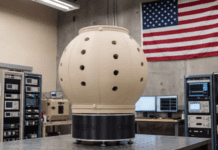
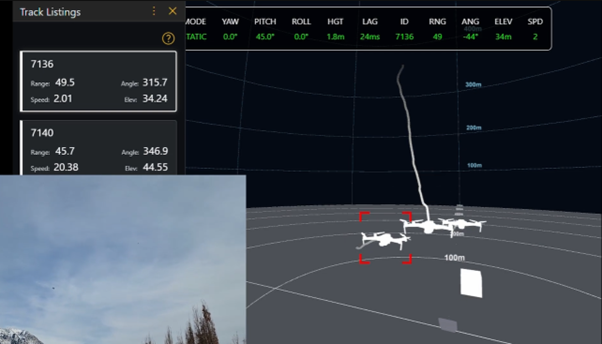
A newly introduced holographic 3D radar (GAX500-3D) is designed to solve that problem by monitoring the entire airspace continuously instead of scanning it sequentially. The compact system uses what its developers describe as a “floodlight” approach, illuminating and observing the full volume of space simultaneously rather than pointing a narrow beam in one direction at a time.
Operating in the 10.0 to 10.5 gigahertz frequency range, the radar can reportedly track up to 50 airborne targets in as little as 56 milliseconds. According to NextGenDefense, this allows the system to refresh the full air picture up to 32 times faster than conventional ESA radars under certain conditions. The radar is optimized for detecting small drones at distances of up to 500 meters.
The system achieves this while maintaining a relatively compact footprint. Weighing under four kilograms and roughly the size of a small briefcase, it is designed for rapid deployment on mobile platforms. The radar can reportedly be configured through a web-based interface in under 10 minutes and consumes less than 35 watts of power, supporting continuous low-power operation.
Unlike larger fixed radar systems, the platform is intended for integration onto tactical vehicles and forward-deployed units. Its environmental specifications also allow operation across a wide temperature range, supporting use in harsh field conditions.
From a defense perspective, continuous full-volume monitoring is particularly relevant for counter-drone missions. Swarm attacks and low-altitude UAVs can exploit the refresh limitations of traditional radar architectures, especially when multiple threats approach simultaneously from different directions.
The broader trend reflects increasing interest in smaller, distributed sensing systems capable of maintaining uninterrupted situational awareness. As drone threats evolve, radar systems built around continuous tracking rather than periodic scanning may become increasingly important for protecting mobile forces and critical infrastructure.