

This post is also available in:
 עברית (Hebrew)
Enterprise adoption of advanced AI tools has been shaped as much by infrastructure as by capability. When access to leading models is tied to a single cloud provider, organizations outside that ecosystem face integration challenges, limiting flexibility and slowing deployment. This creates a bottleneck where innovation exists, but access is constrained.
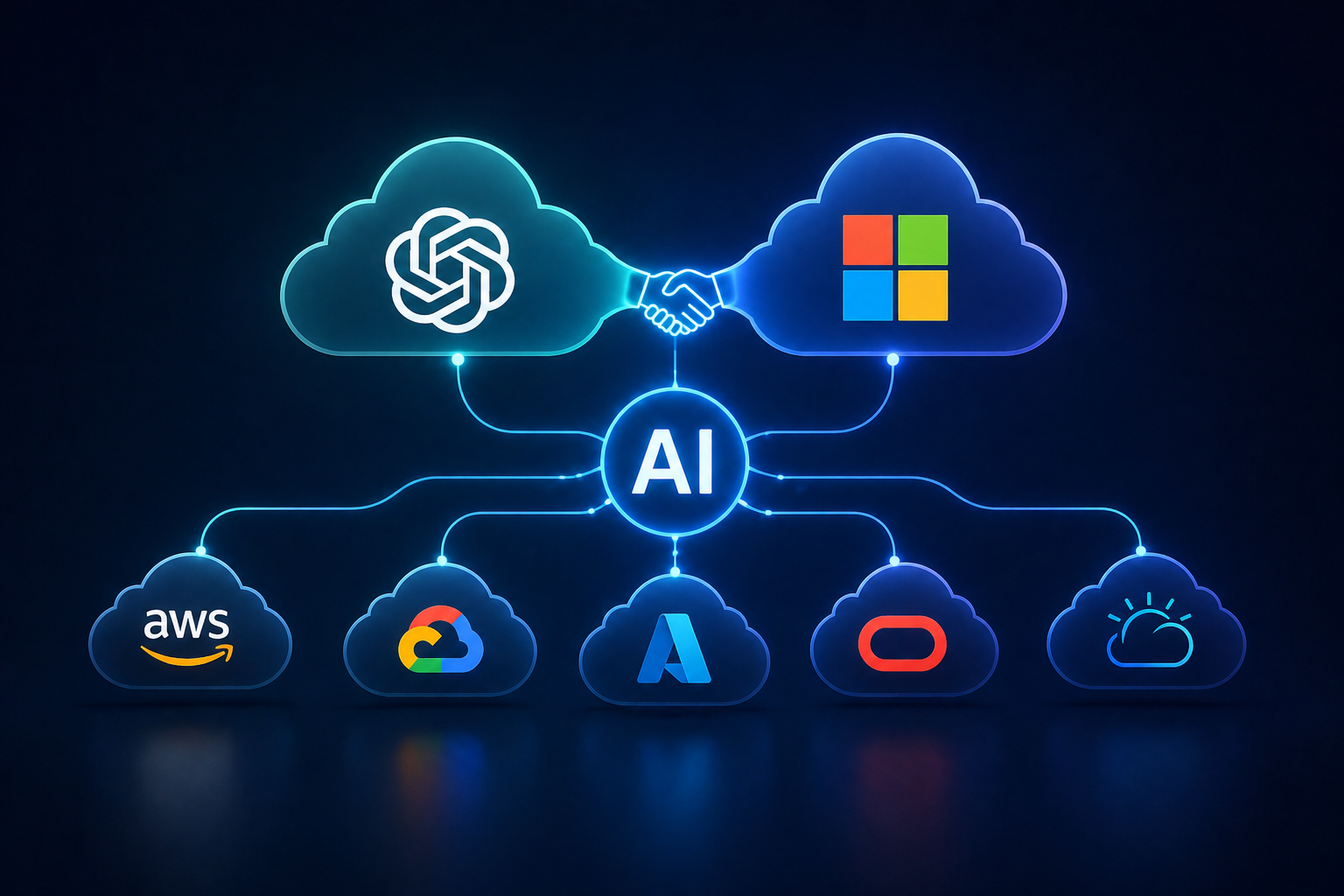
A recent shift in partnership structure (between Microsoft and OpenAI) is designed to address this limitation by removing exclusivity between a major AI developer and its primary cloud partner. Instead of being confined to a single infrastructure, the AI platform can now be deployed across multiple cloud environments. According to Interesting Engineering, this allows organizations to integrate advanced models into existing systems without changing their underlying architecture.
The change also alters how intellectual property is shared. While long-term licensing agreements remain in place, they are no longer exclusive, giving the AI developer greater freedom to expand distribution. At the same time, financial arrangements have been adjusted, decoupling revenue flows from specific technology milestones and introducing caps on certain payments. This creates a more flexible framework for scaling services across different markets.
From a technical perspective, this opens the door to broader interoperability. Enterprises can now access the same AI capabilities regardless of their cloud provider, enabling more consistent deployment across hybrid or multi-cloud environments. This is particularly relevant for large organizations that operate across multiple platforms and require compatibility at scale.
Another important aspect is capacity. By expanding beyond a single infrastructure, the AI provider can increase compute availability and respond to growing demand more efficiently. This supports faster rollout of new features and reduces dependency on a single provider’s data centers.
From a defense and homeland security perspective, the move toward multi-cloud AI access has implications for resilience and redundancy. Systems that are not tied to a single infrastructure are less vulnerable to disruption and can be deployed across different environments as needed. This flexibility is particularly important for critical applications that require continuity under varying conditions.
As AI becomes a core component of enterprise and operational systems, access models are evolving. Removing exclusivity reflects a shift toward broader availability, where infrastructure becomes a layer of delivery rather than a limiting factor.























