

This post is also available in:
 עברית (Hebrew)
The central challenge on the modern battlefield is transitioning from small-scale experiments to the operational deployment of autonomous systems in mass quantities. While many technologies prove effective in controlled environments, the ability to manufacture, transport, deploy, and operate thousands of robotic units in a coordinated and efficient manner presents a significant logistical and strategic hurdle. The gap between theoretical capability and field application is critical, requiring a command, control, and logistics infrastructure entirely different from that needed for single platforms.
To bridge this gap, a dedicated large-scale exercise was conducted. According to Forbes, the Pentagon’s Swarm Forge initiative was designed to test these exact challenges. The exercise’s goal is not merely to test the performance of the aerial vehicles themselves, but the entire supply and operational chain, from production to achieving a tactical effect on the ground. This represents the shift from theoretical concepts and simulations to a hardware and software test at an unprecedented scale, simulating complex operational scenarios.
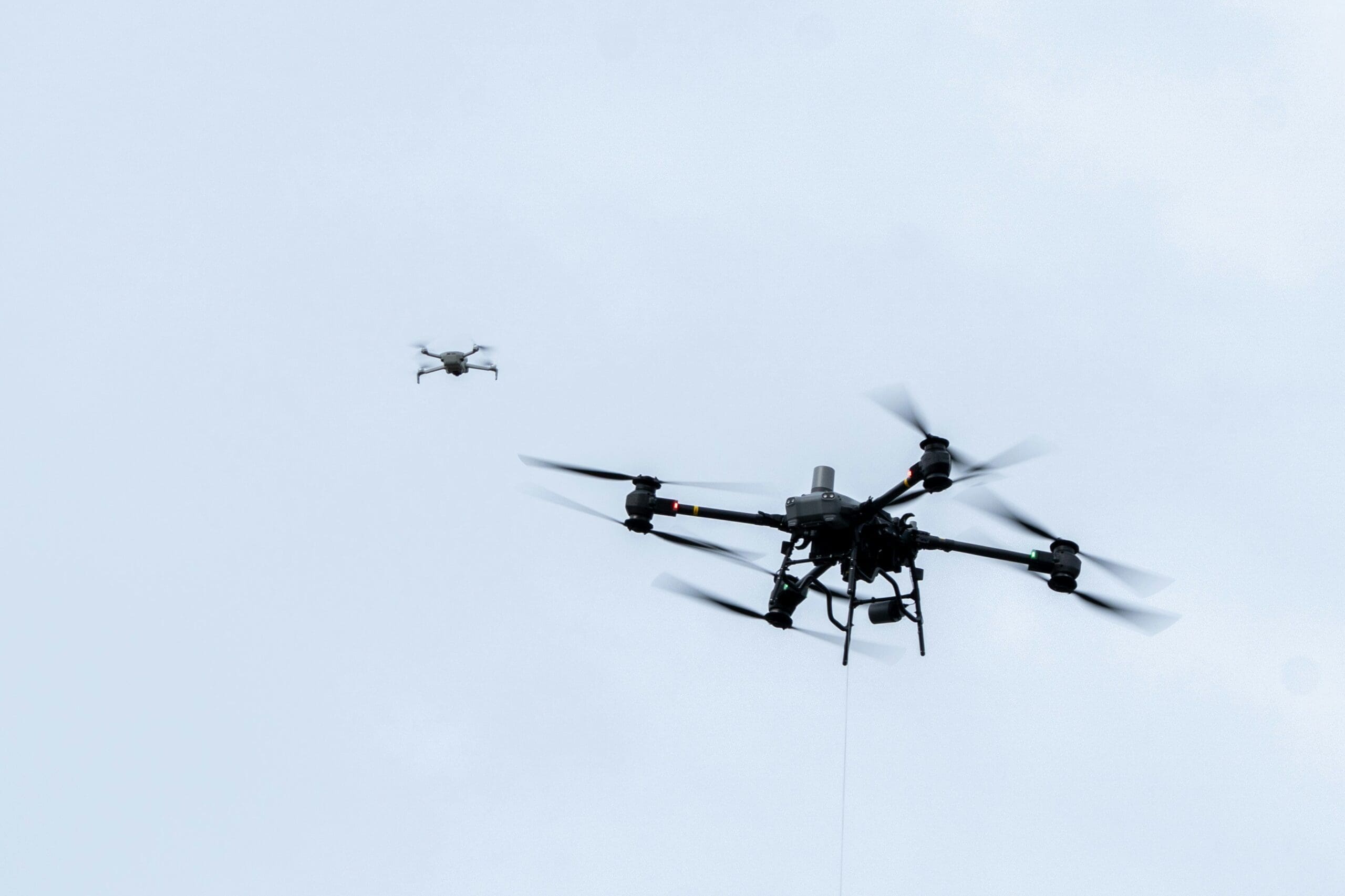
As part of the exercise, a live-fire demonstration was conducted in which a single operator tasked a swarm of three small unmanned aerial vehicles with engaging three separate targets simultaneously. Rather than manually piloting each drone, the operator selected the targets through a mission interface, after which the swarm autonomously planned and executed the strike. Each drone was equipped with a kinetic payload and coordinated its approach with the others, dynamically sharing positional data and target assignments throughout the flight. The system was designed to compensate for potential losses, automatically reallocating targets if a drone failed, and to complete the mission even under degraded communications conditions. The test concluded with the synchronized impact of all three drones on their designated targets, validating the end-to-end operation of autonomous swarm control in a real-world, live-fire environment.
Unlike previous tests that focused on specific technological aspects, the current exercise examines the overall picture. It includes the ability to manage a command and control (C2) system capable of handling an entire swarm, coordinating between multiple platforms, and ensuring continuous, stable communication in a contested environment. The objective is to validate that the swarm can be operated as a single entity, performing complex tasks autonomously while minimizing the human intervention required for management.
The focus is on creating a tangible operational capability in the near term, not just on future technological development. Success in such an exercise marks a significant leap, indicating that the operational use of autonomous swarms is no longer a distant vision but an emerging and viable military capability. These types of exercises are essential for validating the concepts, technologies, and logistics required to operate a significant robotic force.
The shift from isolated experiments to mass exercises is a critical milestone in the evolution of autonomous warfare. These events not only test the technology but also shape the doctrine and strategy that will define future conflicts, accelerating the integration of unmanned systems as a decisive force on the battlefield.























