This post is also available in:
 עברית (Hebrew)
Unmanned aerial systems have become a central element in modern conflict, but their effectiveness depends heavily on navigation accuracy, communication links and targeting precision. While early-generation drones relied on relatively simple guidance systems, newer platforms are increasingly shaped by software, data integration and external intelligence sources.
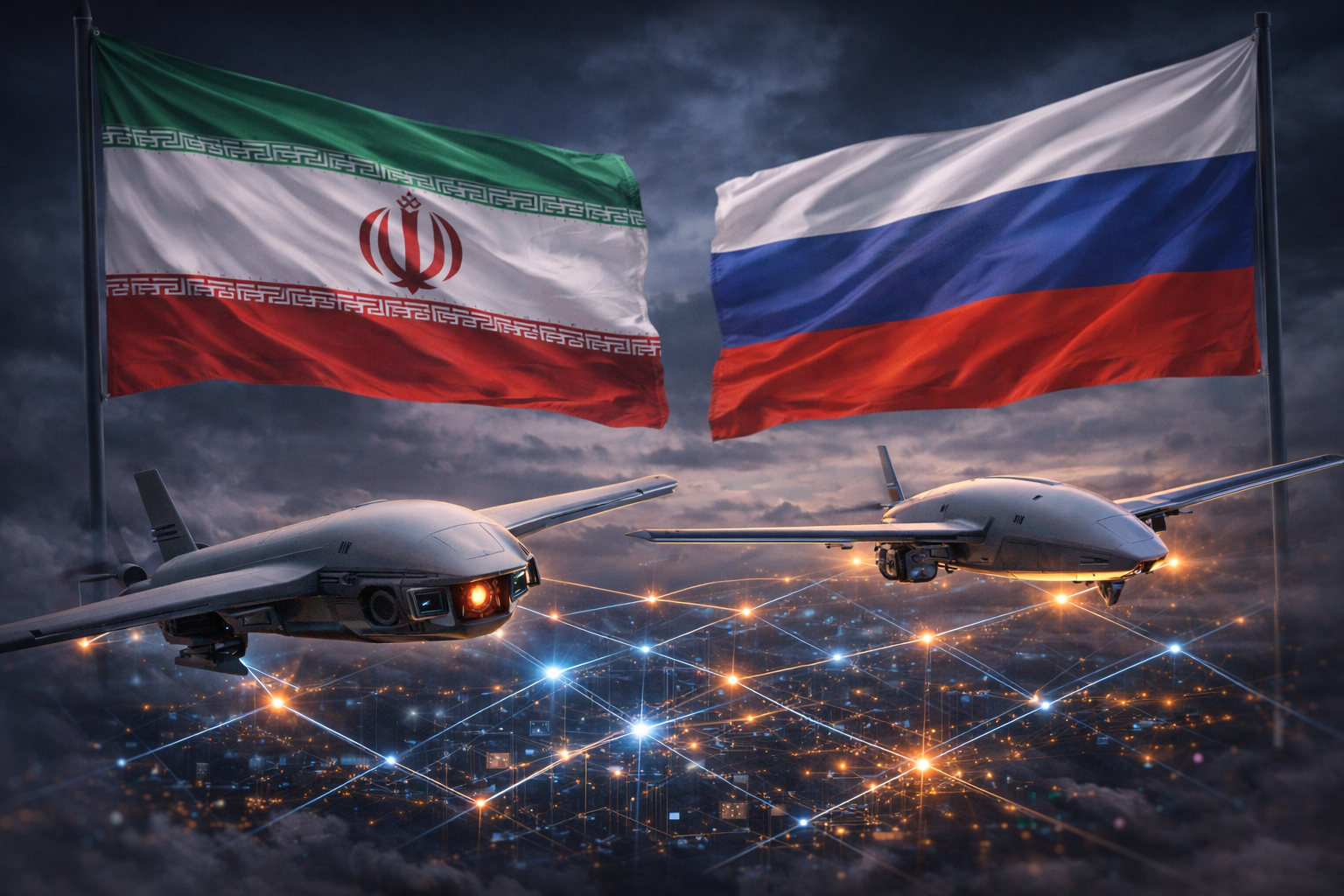
Recent reports indicate that drone capabilities are being enhanced by Russia, for Iran, through the integration of satellite imagery, upgraded components and operational guidance. These additions are designed to improve how drones navigate, communicate and identify targets, particularly in complex or contested environments.
One of the key upgrades involves the use of satellite data to refine targeting. By combining aerial imagery with onboard systems, operators can improve strike accuracy and adapt flight paths in real time. This approach allows drones to operate more effectively over long distances and in areas where direct line-of-sight control is limited.
According to Cyber News, at the same time, modifications to drone hardware and software are focused on strengthening communication links and navigation systems. Improved connectivity enables more reliable control and data transmission, while enhanced targeting systems support more precise engagement of objectives.
Operational tactics are also evolving. Coordinated drone strikes may involve launching multiple platforms at varying altitudes to complicate detection and overwhelm defensive systems. Such methods draw on recent battlefield experience in Ukraine, where combining drones with other strike assets has been used to increase overall effectiveness.
Beyond hardware improvements, the shift toward software-driven systems is becoming increasingly significant. Advances in artificial intelligence, machine vision and autonomous navigation are enabling drones to operate with greater independence. Some developments point toward swarm coordination, where multiple drones function as a networked system rather than individual units.
As drones become more connected and data-dependent, they begin to resemble distributed computing systems. This creates both operational advantages and new vulnerabilities, including exposure to signal interception, cyber intrusion or reverse engineering.
The combination of satellite integration, AI and swarm tactics suggests that future drone operations will rely as much on data and software as on physical platforms. As these systems continue to evolve, countermeasures will need to address not only the aircraft themselves, but also the digital infrastructure that supports them.