This post is also available in:
 עברית (Hebrew)
Small unmanned aerial systems have become a routine threat on modern battlefields and around naval vessels. Commercial quadcopters and improvised drones are inexpensive, agile, and difficult to hit with traditional rifle fire. Countering them often requires specialized systems—jammers, missiles, or dedicated air-defense platforms—that are costly or not always available to frontline troops. Standard small-arms ammunition, designed for ground targets, offers limited hit probability against fast-moving aerial threats.
A new family of anti-drone cartridges is intended to change that dynamic by modifying the effect of conventional rifle fire. Known as the Drone Killer Cartridge (DKC), the ammunition is engineered to create a shotgun-style spread while remaining compatible with existing service weapons. Instead of relying on a single projectile, the round disperses multiple sub-projectiles after exiting the barrel, increasing the likelihood of striking a drone without requiring pinpoint precision.
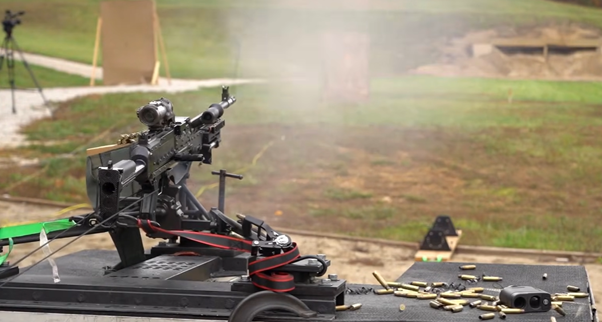
According to NextGenDefense, two main configurations are being developed. The segmented variant separates into three individual projectiles shortly after firing. The pelletized version releases a cloud of high-density pellets—up to five per round—designed to widen the engagement envelope against small airborne targets. Mature versions are available in common military calibers such as 7.62mm and 5.56mm, with .50-caliber options already fielded and additional calibers under development. The ammunition remains compatible with existing suppressors and can be used in standard rifles, automatic weapons, and machine guns.
During recent demonstrations, the system reportedly achieved a 92 percent success rate against drone targets. Notably, first-time users were able to neutralize drones using standard optics and issued weapons, suggesting that the learning curve is limited. The goal is to provide a low-cost, scalable method of countering UAS at extended distances without relying on expensive interceptors.
As small UAVs proliferate, giving individual soldiers and sailors the ability to engage them directly adds an additional layer to air defense. By enhancing existing weapons rather than introducing entirely new platforms, the approach aims to improve readiness while controlling costs.
The cartridge is now being offered to industry partners for wider production, signaling a push toward fielding. In an environment where drones are increasingly accessible, adapting basic infantry weapons to meet aerial threats represents a practical evolution of small-arms capability.