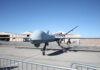


A series of tests has recently shown that live and virtual drones could work together, with high degrees of autonomy, to complete missions even when their communications and GPS were under heavy electronic attack.
In a test series at Yuma Proving Ground in Arizona, DARPA’s Collaborative Operations in electromagnetic Denied Environment (CODE) program demonstrated the ability of CODE-equipped UAVs to adapt and respond to unexpected threats in an anti-access area denial (A2AD) environment.
The UAVs efficiently shared information, cooperatively planned and allocated mission objectives, made coordinated tactical decisions, and collaboratively reacted to a dynamic, high-threat environment with minimal communication.
The ability for CODE-enabled vehicles to interact when communications are degraded is an important step toward the program goal to conduct dynamic, long-distance engagements of highly mobile ground and maritime targets in contested or denied battlespace, reports darpa.mil.
“The test series expanded on previously demonstrated approaches to low bandwidth collaborative sensing and on-board planning. It demonstrated the ability to operate in more challenging scenarios, where both communications and GPS navigation were denied for extended periods,” said Scott Wierzbanowski, DARPA program manager for CODE.
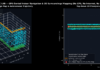
During the tests, uhe systems autonomously collaborated to navigate, search, localize, and engage both pre-planned and pop-up targets protected by a simulated Integrated Air Defense System (IADS) in communications- and GPS-denied scenarios.