This post is also available in:
 עברית (Hebrew)
Naval forces face a growing need to monitor and operate across vast stretches of ocean without relying solely on crewed ships. Long-range patrols, intelligence collection, and strike missions require platforms that can remain at sea for extended periods while keeping personnel out of harm’s way. Traditional vessels, however capable, are costly to deploy continuously and expose sailors to unnecessary risk in contested areas.
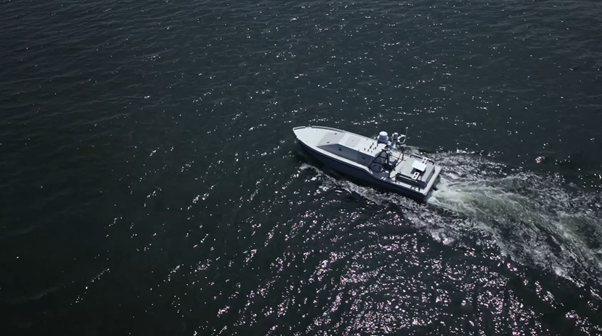
According to Interesting Engineering, to address this, the US Navy has launched a major expansion of its unmanned surface fleet through a new production agreement that accelerates the delivery of long-range autonomous boats. The contract, valued at $392 million, will supply the service with a 7.31-meter autonomous vessel capable of traveling roughly 1,852 nautical kms while carrying a payload of up to 453 kgs. Built for sustained blue-water operations, the platform can exceed 35 knots and operate as an independent node or as part of a wider network of manned and unmanned assets.
For defense and homeland security organizations, vessels of this type offer an alternative to deploying large ships for routine surveillance or response missions. They can patrol coastal approaches, gather intelligence, or deliver non-kinetic effects without placing crews at risk. Their relatively small size and expendable nature also support distributed maritime operations — a concept gaining traction as navies look for ways to complicate an adversary’s targeting and improve resilience across large theaters.
The platform selected for production includes integrated sensors, mast-mounted antennas, and a communications suite designed for remote tasking. Its architecture supports roles ranging from maritime domain awareness to electronic warfare and kinetic payload delivery. Designed as part of a hybrid fleet concept, the vessel is meant to extend the reach of crewed ships by operating far beyond visual range and taking on missions that do not require the presence of a traditional warship.
A notable aspect of the program is its rapid development cycle. Using an Other Transaction Authority framework, the US Navy moved from prototype trials to production in under a year — a timeline far shorter than what is typical for maritime acquisitions. The mechanism allows the service to bypass portions of conventional procurement regulations, enabling faster fielding of systems needed to test emerging operational ideas.
While they have not disclosed how many vessels will ultimately be produced or when they will enter service, officials describe the agreement as a model for future unmanned programs. The initiative reflects a broader move toward a distributed, autonomous maritime force built around smaller, more numerous platforms capable of operating at long range with low logistical demands.