

This post is also available in:
 עברית (Hebrew)
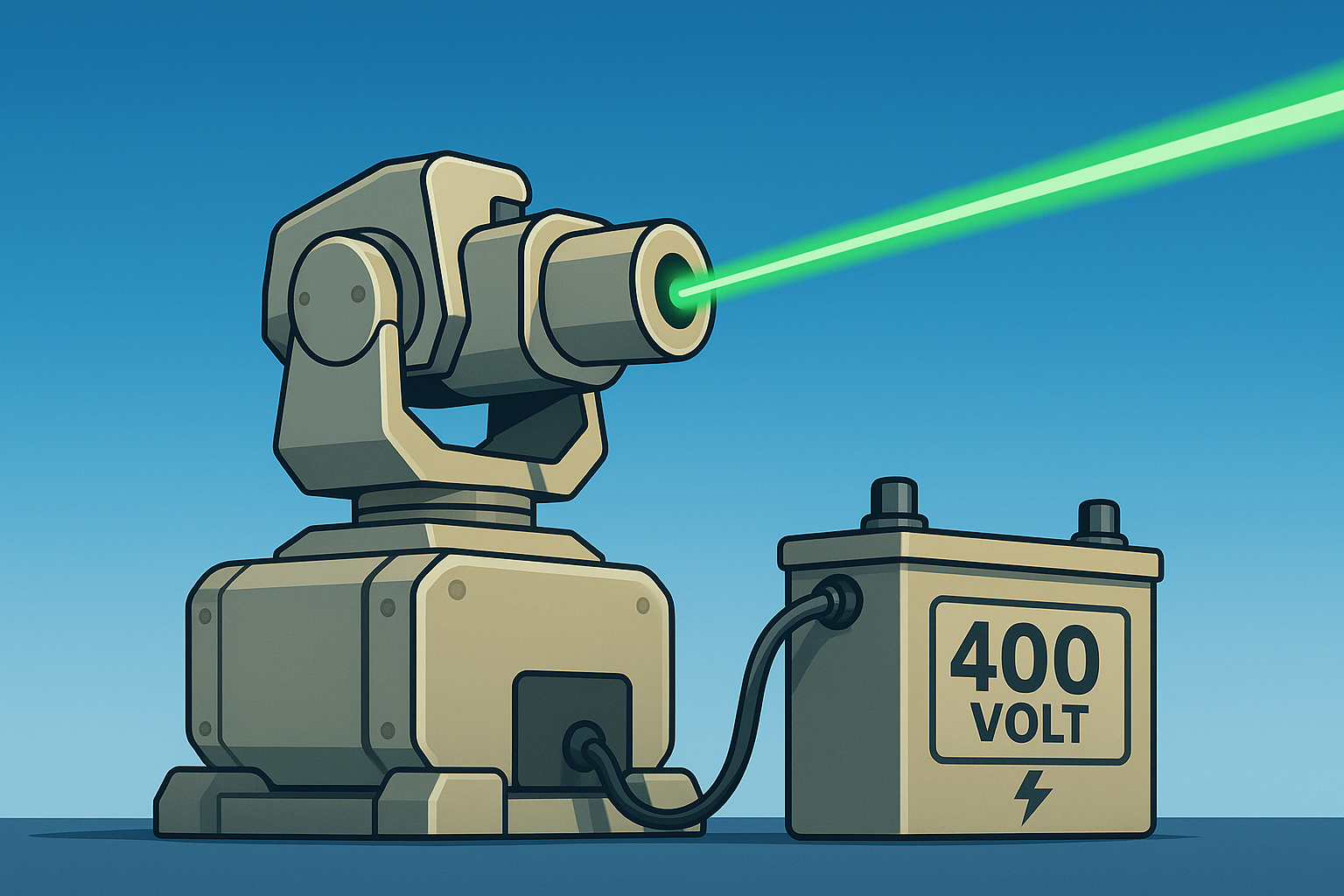
As high-power lasers move from experimental concepts to practical counter-drone tools, one technical bottleneck continues to slow progress: power. Directed-energy systems require fast, intense bursts of electricity that traditional military batteries struggle to deliver, especially in harsh environments or on mobile platforms. A new 400-volt battery prototype developed in the United States is designed specifically to fill that gap.
The challenge for laser-based counter-UAS systems is twofold. First, they must generate enough instantaneous power to disable fast-moving threats such as small drones or loitering munitions. Second, they need a power source robust enough to tolerate recoil-free firing, heat buildup, rapid cycling, and rough handling. Standard defense batteries often lack the required thermal resilience or cannot discharge energy quickly enough.
The newly developed battery addresses these issues through a combination of electrical and thermal modeling, selective cell architecture, and a safety-focused design meant for high-stress environments. Built in just five weeks, the prototype uses a modular approach that allows electrical, mechanical, and firmware systems to be engineered simultaneously, reducing the time from concept to field-ready hardware. According to technical details provided, the design supports the heavy power draw associated with directed-energy platforms, including counter-drone laser systems.
According to Interesting Engineering, a rugged housing and internal safety mechanisms are meant to ensure reliable operation under vibration, shock, and temperature extremes, meeting the stringent expectations associated with platforms tested under MIL-STD-810H conditions. With production planned for 2026, the system is positioned to support the growing class of mobile laser effectors being evaluated by militaries worldwide.
Defense organizations have shown rising interest in directed-energy solutions as drones become more widespread on the battlefield. Laser weapons offer a low-cost-per-shot alternative to traditional interceptors, which constitutes an advantage when facing large numbers of small UAVs. The U.S. Army, for example, is exploring high-energy systems capable of engaging multiple drone classes, ranging from commercial quadcopters to more sophisticated Group 3 platforms.
A power source that can reliably feed these lasers is therefore a critical piece of the broader effort to modernize counter-UAS defenses. If the new 400V battery meets expectations in upcoming field trials, it could help accelerate deployment of laser-based protection systems across military bases, forward positions, and key infrastructure sites, which are considered areas where rapid, precise, and cost-efficient defenses are increasingly essential.























